

Mighty Manchester
- Sep 21, 2016
- 2 min read

Even though Manchester can trace its beginnings to the Roman period, it may have remained a small village in the north of England if it were not for cotton, which is peculiar really, as England is too cold to grow cotton. What northern England does have, however, is cool wet weather – although happily, not this week! A cool humid climate is perfect for spinning and weaving cotton, so coupled with England’s shipping strength and industrial might from the 18th Century, all the elements were in place for Manchester (or Cottonopolis as it was colloquially known) to become the textile powerhouse of the world. By the late 19th Century, 70% of the world’s woven cotton fabric came from this area, still reflected today in the fact that if you go to David Jones to buy bed sheets, you’ll be going to the manchester department.
The prosperity of this time is still evident in the buildings; the neo-gothic town hall, the old cotton warehouses, banks, insurance companies, shipping offices, and so on. Most of these buildings have been repurposed as shops, restaurants, apartments and hotels which support Manchester’s new era of affluence. The industries of the 21st century include education, there are about 100,000 students at tertiary institutions in the area; conventions, the city is full of beauty consultants this week; and football tourism! The National Football Museum is here, and apparently there is also a local football team that is quite well known………………….
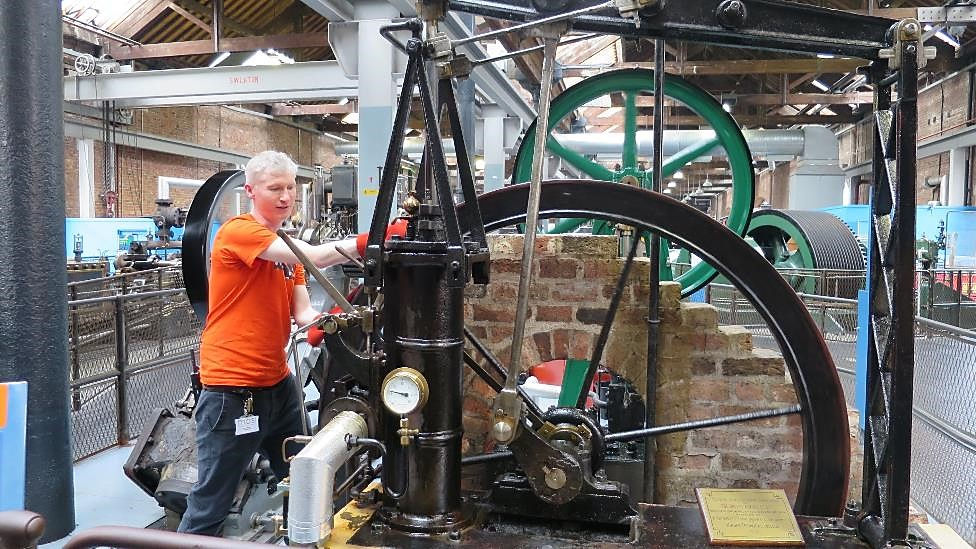
As interesting as these things are, it’s not really what brought us here. For Steve, it was the Museum of Science and Industry, particularly the shed (an old port building) full of steam engines which had him excited. It was interesting, as the staff were so enthusiastic, and gave the best explanation of how a steam engine works that I have ever heard!
For me, it was the libraries. The John Rylands library is acknowledged as one of the most spectacular libraries in the world. It was commissioned by Mrs Rylands in memory of her husband in the late 19th Century with a limitless budget, and contains many rare and valuable books. One of the treasures is a portion of John’s gospel which is the oldest known gospel fragment. The Chethams Library, dating to 1653 (pictured) is the oldest library in the English speaking world and is housed in a building dating to 1421. It smells wonderfully of old books. The best thing about both these libraries is that, with the exception of very fragile books, anyone can access them and as one of the guides told me, “sit in our reading room for the rest of your life if you wish!”
Comments